

How Can Advanced Sensing and Vision Improve Industrial Automation?
2026-09-07
Modern manufacturing depends on fast, accurate, and flexible inspection technologies to maintain product quality while reducing manual operations. Keyence Sensing and Vision solutions are widely recognized for combining sensing, image-based inspection, measurement, positioning, and automation technologies into practical industrial applications. From detecting product presence and measuring dimensions to identifying defects and guiding robotic operations, sensing and vision technologies can help manufacturers create more stable and efficient production processes. For companies looking for application-focused automation solutions, Floating Light Automation Trade Co., Ltd. provides professional integration and customization support, including model-specific and ship-type customization according to different equipment structures and production requirements.
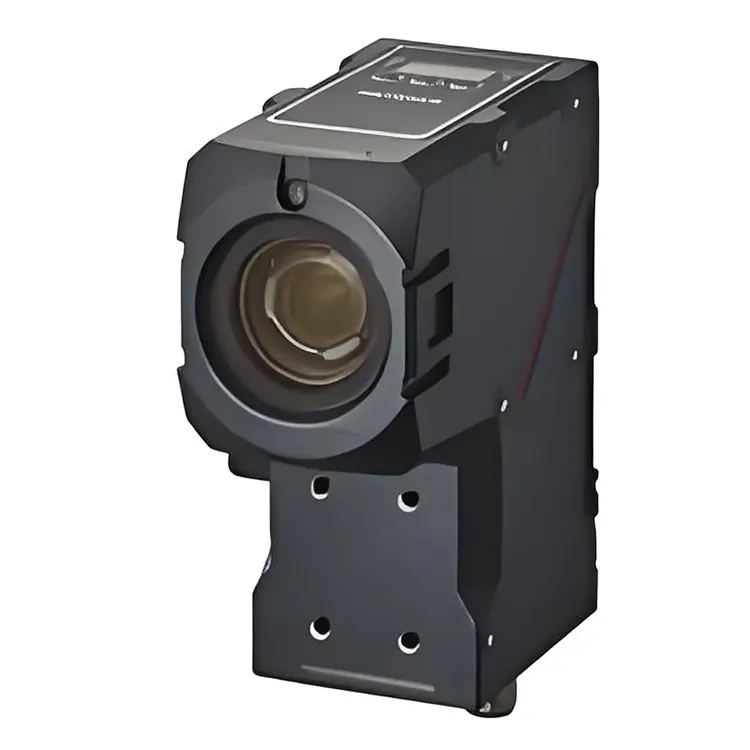
What Makes Keyence Sensing and Vision Important?
Traditional sensors usually focus on detecting a specific point, while vision-based technology can analyze a much larger area through images. This difference is particularly valuable when production lines involve variable product positions, different shapes, surface conditions, or multiple inspection points.
Modern vision sensors can perform presence inspection, quantity checking, color and product differentiation, appearance inspection, positioning, dimension measurement, identification, and even vision-guided robotic applications.
The main advantages include:
-
High inspection flexibility: One vision sensor can perform multiple detection tasks.
-
Stable quality control: Automated image analysis reduces dependence on manual visual inspection.
-
Faster production: Inspection can take place while products move along the production line.
-
Better adaptability: Image-based detection can handle variations in product position and orientation.
-
Simplified integration: Compact vision solutions can reduce the complexity of conventional multi-sensor systems.
-
Automation compatibility: Vision information can be connected with robotic and control systems.
These characteristics make Keyence Sensing and Vision technology suitable for electronics, automotive components, packaging, metal processing, logistics, consumer products, and many other manufacturing environments.
How Does Vision-Based Inspection Improve Production?
The basic principle is straightforward: a camera captures an image of the target, while the vision system analyzes characteristics such as shape, color, brightness, edges, position, and other visual features. The system then compares the detected information against predefined inspection criteria.
Unlike a conventional point sensor, a vision sensor can inspect multiple features within a single field of view. This can reduce the number of individual sensors and positioning devices required for certain applications.
For example, a production line may need to verify whether a component is correctly installed, whether its orientation is correct, whether a marking is present, and whether its appearance meets quality requirements. Instead of assigning separate manual inspection steps to each task, an integrated vision solution can potentially combine several checks into one automated process.
Typical Applications
| Application | Main Function | Production Benefit |
|---|---|---|
| Presence Detection | Confirm whether a component exists | Prevent missing-part errors |
| Position Inspection | Check location and orientation | Improve assembly accuracy |
| Appearance Inspection | Detect surface abnormalities | Strengthen quality control |
| Dimension Measurement | Verify critical dimensions | Maintain product consistency |
| Identification | Read characters, labels or codes | Improve traceability |
| Quantity Inspection | Count components automatically | Reduce counting errors |
| Robot Guidance | Provide positioning information | Improve automated handling |
What Are the Practical Effects of Keyence Sensing and Vision?
One of the most important benefits is improved consistency. Human inspectors can experience fatigue, concentration changes, and differences in judgment. Automated vision inspection applies predefined inspection criteria repeatedly, helping manufacturers establish a more consistent quality-control process.
Another important benefit is production flexibility. Modern manufacturing increasingly involves multiple product models and smaller production batches. A flexible sensing and vision system can make it easier to adjust inspection parameters when products or processes change.
Advanced vision sensors can also simplify difficult inspection applications. For example, the IV series integrates camera, lighting, and processing functions into a compact vision sensor, while newer AI-enabled solutions can automatically optimize imaging and detection conditions for certain applications.
This means operators can spend less time dealing with complicated image-processing adjustments and more time focusing on production management.
Why Is Customization Essential for Automation Equipment?
No two production lines are exactly the same. Equipment dimensions, installation positions, conveyor structures, product characteristics, inspection distances, communication requirements, and operating environments can all be different.
This is why standardized components alone may not always provide the most effective automation solution.
Floating Light Automation Trade Co., Ltd. focuses on application-oriented automation solutions and can support customized configurations according to customer requirements. This includes model-specific customization and ship-type customization, helping customers adapt sensing and vision components to different equipment structures, machine models, and application layouts.
Customization Can Include:
-
Equipment structure customization – Adapt the sensing and vision solution to the available machine space.
-
Model-specific customization – Configure solutions according to different equipment models and production requirements.
-
Ship-type customization – Support customized configurations for different ship types or specialized onboard equipment applications where required.
-
Inspection-point customization – Select suitable sensing positions for different detection requirements.
-
Integration customization – Coordinate sensors, cameras, controllers, PLCs, robots, and other automation components.
-
Application customization – Adjust the solution according to product material, size, surface, speed, and inspection conditions.
This customization capability is particularly valuable for customers who do not want to redesign their entire production line simply to accommodate a standard automation product.
Keyence Sensing and Vision vs. Conventional Manual Inspection
The difference becomes clearer when comparing automated inspection with traditional manual checking.
| Factor | Manual Inspection | Sensing & Vision Automation |
|---|---|---|
| Inspection Speed | Depends on operator | Consistent automated processing |
| Repeatability | May vary | Based on configured criteria |
| Multiple Inspection Points | Time-consuming | Can combine multiple checks |
| Data Integration | Often limited | Can connect with automation systems |
| Long-Term Operation | Human fatigue possible | Suitable for continuous production |
| Product Changeover | Manual adjustment | Parameters can be reconfigured |
| Quality Consistency | Operator dependent | More standardized |
The goal is not simply to replace people with machines. Instead, automation allows operators to focus on higher-value activities while repetitive inspection and detection tasks are handled by reliable equipment.
How Can Floating Light Automation Trade Co., Ltd. Add Value?
Selecting the right sensor or vision component is only one part of an automation project. Correct installation, configuration, communication, mechanical integration, and application adjustment are equally important.
Floating Light Automation Trade Co., Ltd. can help customers evaluate their specific automation requirements and develop a solution around the actual production environment. By combining sensing and vision technologies with customized automation integration, the company aims to provide solutions that are practical rather than simply selling individual components.
For customers handling different equipment models, special machine structures, or customized production processes, the ability to support model-specific and ship-type customization can make the automation project more adaptable.
The company can focus on several key factors during solution planning:
-
Target detection requirements
-
Product dimensions and materials
-
Inspection speed
-
Installation distance
-
Lighting conditions
-
Machine structure
-
Communication interfaces
-
Equipment model
-
Customized ship-type requirements
-
Future production expansion
What Should Buyers Consider Before Choosing a Vision Solution?
Before purchasing a sensing and vision system, manufacturers should clearly define the actual inspection problem rather than selecting equipment based only on specifications.
A practical evaluation should include:
1. What needs to be detected?
Determine whether the application involves presence, position, color, shape, dimension, appearance, identification, or multiple inspection requirements.
2. How fast is the production line?
High-speed production requires suitable image acquisition and processing performance.
3. Are products consistently positioned?
If products can shift or rotate, image-based inspection may provide advantages over point-based detection.
4. What customization is required?
Consider machine structure, equipment model, installation limitations, and special applications before finalizing the system.
5. How will the system communicate with other equipment?
Integration with PLCs, robots, controllers, and production-management systems should be considered at the beginning of the project.
The Future of Industrial Sensing and Vision
As smart manufacturing continues to develop, sensing and vision systems are becoming increasingly important components of automated production. AI-assisted inspection, advanced image processing, 3D inspection, robotic guidance, and integrated measurement technologies are expanding the range of applications that can be automated.
KEYENCE's current vision portfolio includes vision systems, vision sensors, AI-based inspection functions, and solutions for applications such as appearance inspection, positioning, measurement, identification, and robot guidance.
For manufacturers, the real value lies in combining these technologies with the right machine architecture and application strategy. A well-designed solution can improve inspection consistency, production efficiency, process visibility, and long-term scalability.
Conclusion
Keyence Sensing and Vision provides powerful tools for modern industrial inspection, measurement, identification, and automation. Its combination of sensing technology, machine vision, AI-assisted detection, and flexible inspection functions can address a wide variety of manufacturing challenges.
However, successful automation depends on more than advanced hardware. Equipment structure, application requirements, integration, and customization all influence the final performance. With professional automation support and model-specific and ship-type customization, Floating Light Automation Trade Co., Ltd. can help customers build sensing and vision solutions that better match their actual production environments.
If you are looking for a customized sensing and vision solution, need help integrating vision inspection into existing equipment, or require model-specific and ship-type customization, contact us today. Floating Light Automation Trade Co., Ltd. is ready to discuss your application requirements and help you develop a practical, efficient, and scalable automation solution.
